Unit 17 PRACTICE ACTIVITIES AND TASKS FOR LANGUAGE AND SKILLS DEVELOPMENT

Activities and tasks give learners
opportunities to practice and extend their use of language (e.g. new
vocabulary, functional exponents, grammatical structures or the subskills
of listening, reading, speaking and writing). There are distinctive kinds
of activities and tasks you can apply in your classroom. Those tasks and activities
are categorized into controlled, freer and free practice. First, controlled
or restricted practice activities focuses on the form of language.
Here, learners can use only certain items of language; it gives students
practice on using the target language accurately. I would use jazz chants
(short songs), choral drills, substitution drills, transformational drills
or replacing a key word. Second, freer or less controlled practice
activities are the ones in which learners have some choice over what language
they are going to use. In this task, students practice using language
accurately and communicating, this is a task with a real-world outcome. I would
apply role-plays, information-gap activities, sentence competition or surveys.
Third, free practice activities that gives students practice in communicating
and interaction allow them to use whatever language they wish to complete
a task. Here, I would use discussions, sharing or comparing ideas, writing
e-mails, stories, letters, or invitations. You are the only one who can decide
whether to use a controlled, freer or free practice. That choice will depend on
your pupils needs. You can use several kinds of activities in your
lessons because that can help you to keep lessons more interesting and motivating.
Nevertheless, before using various activities you have to make sure they are
suitable for your students´ level of English. For example, you cannot use activities that focus on accuracy and fluency with
elementary learners since they are starting to learn a new language and
they cannot produce it fluently because they continue working out the language
to deduce and calculate how it is used and form. In conclusion, all the
activities and tasks have to be chosen depending on your pupils. (age,
level, needs, learning styles, etc.).
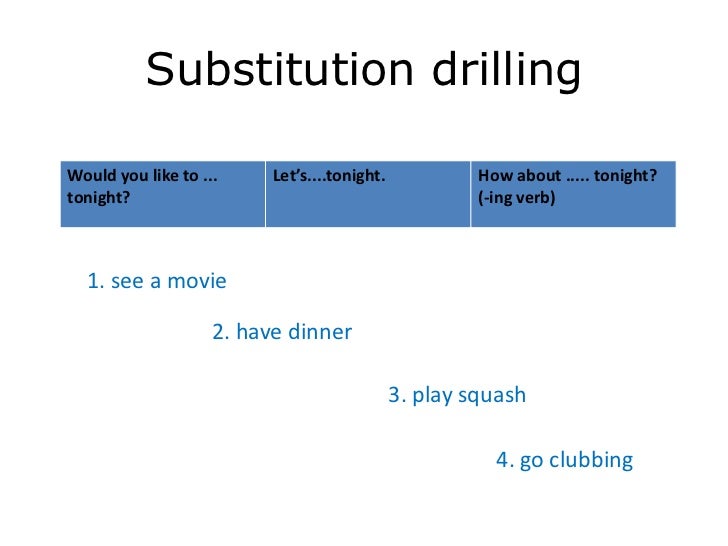
These
pictures show some possible tasks or activites you can apply in your lessons.
Controlled parctice (Substitution drills and choral drills)

Freer practice (surveys and gap-fills)


Free practice (Writing an invitatio andWriting an e-mail)


References for additional
information
- Quizlet.com,. (2014).
TKT - Unit 17 - Practice activities and tasks for language and skills
development. Retrieved 6 December 2014, from http://quizlet.com/52452045/tkt-unit-17-practice-activities-and-tasks-for-language-and-skills-development-flash-cards/
- Practice activities
and tasks for language and skills development. (2009). Teachers`blog.
Retrieved from http://teacheraleupbc.blogspot.com/2009/05/practice-activities-and-tasks-for.html
- Controlled and Free
Practice in Groups. (2009). Retrieved
from http://www.youtube.com/watch?v=w50iwAEV25A

You have some pictures with the examples of some activitites or tasks you can use in your lessons
ReplyDeleteI consider your job very useful since you reccomend us to use technology, too.
ReplyDeletecocsuOinn Kimberly Sammons https://wakelet.com/wake/BLJfbd0AF7HmVLNgnX7jW
ReplyDeletesilangatshand
recquaOdest_me Megan Davis Adobe Photoshop
ReplyDeleteKerish Doctor
CyberLink YouCam
giosmaretun
rompgudispri Sam Taylor This is there
ReplyDeleteclick here
moordmodasam